fcd7c0fc3d
71 Commits
| Author | SHA1 | Message | Date | |
|---|---|---|---|---|
 Mark Lodato
|
c2b332f98a |
Recalculate entity aabbs when meshes change (#4944)
# Objective Update the `calculate_bounds` system to update `Aabb`s for entities who've either: - gotten a new mesh - had their mesh mutated Fixes https://github.com/bevyengine/bevy/issues/4294. ## Solution There are two commits here to address the two issues above: ### Commit 1 **This Commit** Updates the `calculate_bounds` system to operate not only on entities without `Aabb`s but also on entities whose `Handle<Mesh>` has changed. **Why?** So if an entity gets a new mesh, its associated `Aabb` is properly recalculated. **Questions** - This type is getting pretty gnarly - should I extract some types? - This system is public - should I add some quick docs while I'm here? ### Commit 2 **This Commit** Updates `calculate_bounds` to update `Aabb`s of entities whose meshes have been directly mutated. **Why?** So if an entity's mesh gets updated, its associated `Aabb` is properly recalculated. **Questions** - I think we should be using `ahash`. Do we want to do that with a direct `hashbrown` dependency or an `ahash` dependency that we configure the `HashMap` with? - There is an edge case of duplicates with `Vec<Entity>` in the `HashMap`. If an entity gets its mesh handle changed and changed back again it'll be added to the list twice. Do we want to use a `HashSet` to avoid that? Or do a check in the list first (assuming iterating over the `Vec` is faster and this edge case is rare)? - There is an edge case where, if an entity gets a new mesh handle and then its old mesh is updated, we'll update the entity's `Aabb` to the new geometry of the _old_ mesh. Do we want to remove items from the `Local<HashMap>` when handles change? Does the `Changed` event give us the old mesh handle? If not we might need to have a `HashMap<Entity, Handle<Mesh>>` or something so we can unlink entities from mesh handles when the handle changes. - I did the `zip()` with the two `HashMap` gets assuming those would be faster than calculating the Aabb of the mesh (otherwise we could do `meshes.get(mesh_handle).and_then(Mesh::compute_aabb).zip(entity_mesh_map...)` or something). Is that assumption way off? ## Testing I originally tried testing this with `bevy_mod_raycast` as mentioned in the original issue but it seemed to work (maybe they are currently manually updating the Aabbs?). I then tried doing it in 2D but it looks like `Handle<Mesh>` is just for 3D. So I took [this example](https://github.com/bevyengine/bevy/blob/main/examples/3d/pbr.rs) and added some systems to mutate/assign meshes: <details> <summary>Test Script</summary> ```rust use bevy::prelude::*; use bevy::render:📷:ScalingMode; use bevy::render::primitives::Aabb; /// Make sure we only mutate one mesh once. #[derive(Eq, PartialEq, Clone, Debug, Default)] struct MutateMeshState(bool); /// Let's have a few global meshes that we can cycle between. /// This way we can be assigned a new mesh, mutate the old one, and then get the old one assigned. #[derive(Eq, PartialEq, Clone, Debug, Default)] struct Meshes(Vec<Handle<Mesh>>); fn main() { App::new() .add_plugins(DefaultPlugins) .init_resource::<MutateMeshState>() .init_resource::<Meshes>() .add_startup_system(setup) .add_system(assign_new_mesh) .add_system(show_aabbs.after(assign_new_mesh)) .add_system(mutate_meshes.after(show_aabbs)) .run(); } fn setup( mut commands: Commands, mut meshes: ResMut<Assets<Mesh>>, mut global_meshes: ResMut<Meshes>, mut materials: ResMut<Assets<StandardMaterial>>, ) { let m1 = meshes.add(Mesh::from(shape::Icosphere::default())); let m2 = meshes.add(Mesh::from(shape::Icosphere { radius: 0.90, ..Default::default() })); let m3 = meshes.add(Mesh::from(shape::Icosphere { radius: 0.80, ..Default::default() })); global_meshes.0.push(m1.clone()); global_meshes.0.push(m2); global_meshes.0.push(m3); // add entities to the world // sphere commands.spawn_bundle(PbrBundle { mesh: m1, material: materials.add(StandardMaterial { base_color: Color::hex("ffd891").unwrap(), ..default() }), ..default() }); // new 3d camera commands.spawn_bundle(Camera3dBundle { projection: OrthographicProjection { scale: 3.0, scaling_mode: ScalingMode::FixedVertical(1.0), ..default() } .into(), ..default() }); // old 3d camera // commands.spawn_bundle(OrthographicCameraBundle { // transform: Transform::from_xyz(0.0, 0.0, 8.0).looking_at(Vec3::default(), Vec3::Y), // orthographic_projection: OrthographicProjection { // scale: 0.01, // ..default() // }, // ..OrthographicCameraBundle::new_3d() // }); } fn show_aabbs(query: Query<(Entity, &Handle<Mesh>, &Aabb)>) { for thing in query.iter() { println!("{thing:?}"); } } /// For testing the second part - mutating a mesh. /// /// Without the fix we should see this mutate an old mesh and it affects the new mesh that the /// entity currently has. /// With the fix, the mutation doesn't affect anything until the entity is reassigned the old mesh. fn mutate_meshes( mut meshes: ResMut<Assets<Mesh>>, time: Res<Time>, global_meshes: Res<Meshes>, mut mutate_mesh_state: ResMut<MutateMeshState>, ) { let mutated = mutate_mesh_state.0; if time.seconds_since_startup() > 4.5 && !mutated { println!("Mutating {:?}", global_meshes.0[0]); let m = meshes.get_mut(&global_meshes.0[0]).unwrap(); let mut p = m.attribute(Mesh::ATTRIBUTE_POSITION).unwrap().clone(); use bevy::render::mesh::VertexAttributeValues; match &mut p { VertexAttributeValues::Float32x3(v) => { v[0] = [10.0, 10.0, 10.0]; } _ => unreachable!(), } m.insert_attribute(Mesh::ATTRIBUTE_POSITION, p); mutate_mesh_state.0 = true; } } /// For testing the first part - assigning a new handle. fn assign_new_mesh( mut query: Query<&mut Handle<Mesh>, With<Aabb>>, time: Res<Time>, global_meshes: Res<Meshes>, ) { let s = time.seconds_since_startup() as usize; let idx = s % global_meshes.0.len(); for mut handle in query.iter_mut() { *handle = global_meshes.0[idx].clone_weak(); } } ``` </details> ## Changelog ### Fixed Entity `Aabb`s not updating when meshes are mutated or re-assigned. |
||
|
François
|
4affc8cd93 |
add a SpatialBundle with visibility and transform components (#5344)
# Objective - Help user when they need to add both a `TransformBundle` and a `VisibilityBundle` ## Solution - Add a `SpatialBundle` adding all components |
||
|
Rob Parrett
|
a63d761aa3 |
Add VisibilityBundle and use it to fix gltfs, scenes, and examples (#5335)
# Objective Gltfs, and a few examples were broken by #5310. Fix em. Closes #5334 ## Solution Add `VisibilityBundle` as described here: https://github.com/bevyengine/bevy/issues/5334#issuecomment-1186050778 and sprinkle it around where needed. |
||
|
Dusty DeWeese
|
9f8bdeeeb9 |
Use Affine3A for GlobalTransform to allow any affine transformation (#4379)
# Objective - Add capability to use `Affine3A`s for some `GlobalTransform`s. This allows affine transformations that are not possible using a single `Transform` such as shear and non-uniform scaling along an arbitrary axis. - Related to #1755 and #2026 ## Solution - `GlobalTransform` becomes an enum wrapping either a `Transform` or an `Affine3A`. - The API of `GlobalTransform` is minimized to avoid inefficiency, and to make it clear that operations should be performed using the underlying data types. - using `GlobalTransform::Affine3A` disables transform propagation, because the main use is for cases that `Transform`s cannot support. --- ## Changelog - `GlobalTransform`s can optionally support any affine transformation using an `Affine3A`. Co-authored-by: Carter Anderson <mcanders1@gmail.com> |
||
|
Carter Anderson
|
40d4992401 |
Visibilty Inheritance, universal ComputedVisibility and RenderLayers support (#5310)
# Objective Fixes #4907. Fixes #838. Fixes #5089. Supersedes #5146. Supersedes #2087. Supersedes #865. Supersedes #5114 Visibility is currently entirely local. Set a parent entity to be invisible, and the children are still visible. This makes it hard for users to hide entire hierarchies of entities. Additionally, the semantics of `Visibility` vs `ComputedVisibility` are inconsistent across entity types. 3D meshes use `ComputedVisibility` as the "definitive" visibility component, with `Visibility` being just one data source. Sprites just use `Visibility`, which means they can't feed off of `ComputedVisibility` data, such as culling information, RenderLayers, and (added in this pr) visibility inheritance information. ## Solution Splits `ComputedVisibilty::is_visible` into `ComputedVisibilty::is_visible_in_view` and `ComputedVisibilty::is_visible_in_hierarchy`. For each visible entity, `is_visible_in_hierarchy` is computed by propagating visibility down the hierarchy. The `ComputedVisibility::is_visible()` function combines these two booleans for the canonical "is this entity visible" function. Additionally, all entities that have `Visibility` now also have `ComputedVisibility`. Sprites, Lights, and UI entities now use `ComputedVisibility` when appropriate. This means that in addition to visibility inheritance, everything using Visibility now also supports RenderLayers. Notably, Sprites (and other 2d objects) now support `RenderLayers` and work properly across multiple views. Also note that this does increase the amount of work done per sprite. Bevymark with 100,000 sprites on `main` runs in `0.017612` seconds and this runs in `0.01902`. That is certainly a gap, but I believe the api consistency and extra functionality this buys us is worth it. See [this thread](https://github.com/bevyengine/bevy/pull/5146#issuecomment-1182783452) for more info. Note that #5146 in combination with #5114 _are_ a viable alternative to this PR and _would_ perform better, but that comes at the cost of api inconsistencies and doing visibility calculations in the "wrong" place. The current visibility system does have potential for performance improvements. I would prefer to evolve that one system as a whole rather than doing custom hacks / different behaviors for each feature slice. Here is a "split screen" example where the left camera uses RenderLayers to filter out the blue sprite. 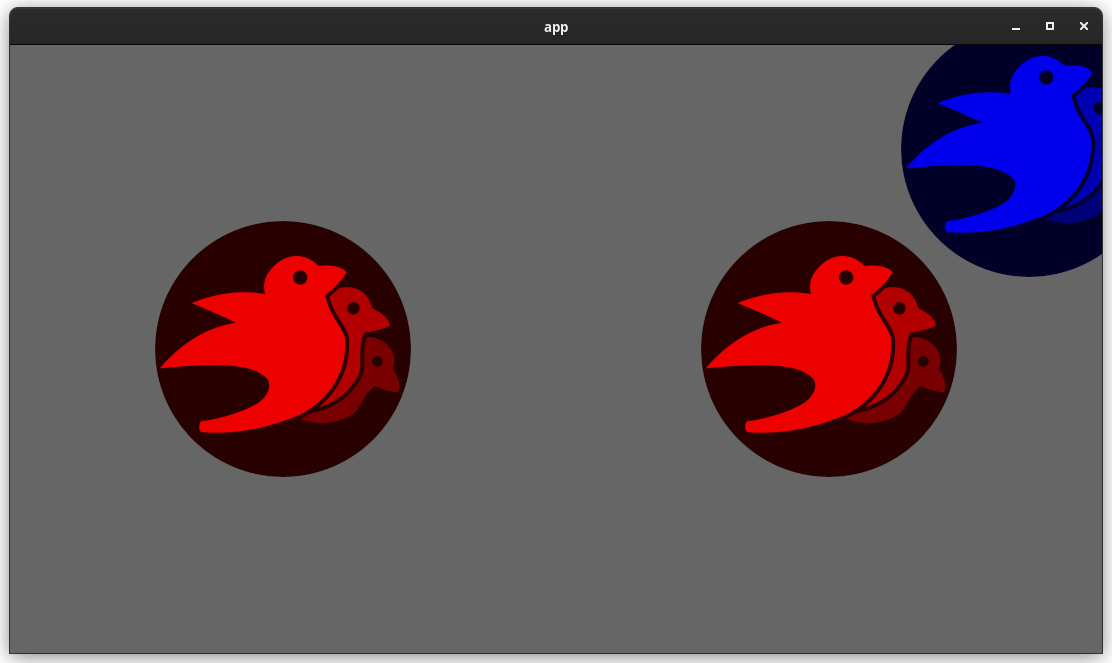 Note that this builds directly on #5146 and that @james7132 deserves the credit for the baseline visibility inheritance work. This pr moves the inherited visibility field into `ComputedVisibility`, then does the additional work of porting everything to `ComputedVisibility`. See my [comments here](https://github.com/bevyengine/bevy/pull/5146#issuecomment-1182783452) for rationale. ## Follow up work * Now that lights use ComputedVisibility, VisibleEntities now includes "visible lights" in the entity list. Functionally not a problem as we use queries to filter the list down in the desired context. But we should consider splitting this out into a separate`VisibleLights` collection for both clarity and performance reasons. And _maybe_ even consider scoping `VisibleEntities` down to `VisibleMeshes`?. * Investigate alternative sprite rendering impls (in combination with visibility system tweaks) that avoid re-generating a per-view fixedbitset of visible entities every frame, then checking each ExtractedEntity. This is where most of the performance overhead lives. Ex: we could generate ExtractedEntities per-view using the VisibleEntities list, avoiding the need for the bitset. * Should ComputedVisibility use bitflags under the hood? This would cut down on the size of the component, potentially speed up the `is_visible()` function, and allow us to cheaply expand ComputedVisibility with more data (ex: split out local visibility and parent visibility, add more culling classes, etc). --- ## Changelog * ComputedVisibility now takes hierarchy visibility into account. * 2D, UI and Light entities now use the ComputedVisibility component. ## Migration Guide If you were previously reading `Visibility::is_visible` as the "actual visibility" for sprites or lights, use `ComputedVisibilty::is_visible()` instead: ```rust // before (0.7) fn system(query: Query<&Visibility>) { for visibility in query.iter() { if visibility.is_visible { log!("found visible entity"); } } } // after (0.8) fn system(query: Query<&ComputedVisibility>) { for visibility in query.iter() { if visibility.is_visible() { log!("found visible entity"); } } } ``` Co-authored-by: Carter Anderson <mcanders1@gmail.com> |
||
|
ira
|
4847f7e3ad |
Update codebase to use IntoIterator where possible. (#5269)
Remove unnecessary calls to `iter()`/`iter_mut()`.
Mainly updates the use of queries in our code, docs, and examples.

```rust
// From
for _ in list.iter() {
for _ in list.iter_mut() {

// To
for _ in &list {
for _ in &mut list {
```

We already enable the pedantic lint [clippy::explicit_iter_loop](https://rust-lang.github.io/rust-clippy/stable/) inside of Bevy. However, this only warns for a few known types from the standard library.

## Note for reviewers
As you can see the additions and deletions are exactly equal.
Maybe give it a quick skim to check I didn't sneak in a crypto miner, but you don't have to torture yourself by reading every line.
I already experienced enough pain making this PR :)


Co-authored-by: devil-ira <justthecooldude@gmail.com>
|
||
|
Jerome Humbert
|
382cd49c3b |
Add documentation to VisibleEntities and related (#5100)
# Objective Add missing docs ## Solution Add documentation to the `VisibleEntities` component, its related `check_visibility()` system, and that system's label. See Discord discussion here : https://discord.com/channels/691052431525675048/866787577687310356/990432663921901678 |
||
|
James Liu
|
389df18343 |
Change check_visibility to use thread-local queues instead of a channel (#4663)
# Objective Further speed up visibility checking by removing the main sources of contention for the system. ## Solution - ~~Make `ComputedVisibility` a resource wrapping a `FixedBitset`.~~ - ~~Remove `ComputedVisibility` as a component.~~ ~~This adds a one-bit overhead to every entity in the app world. For a game with 100,000 entities, this is 12.5KB of memory. This is still small enough to fit entirely in most L1 caches. Also removes the need for a per-Entity change detection tick. This reduces the memory footprint of ComputedVisibility 72x.~~ ~~The decreased memory usage and less fragmented memory locality should provide significant performance benefits.~~ ~~Clearing visible entities should be significantly faster than before:~~ - ~~Setting one `u32` to 0 clears 32 entities per cycle.~~ - ~~No archetype fragmentation to contend with.~~ - ~~Change detection is applied to the resource, so there is no per-Entity update tick requirement.~~ ~~The side benefit of this design is that it removes one more "computed component" from userspace. Though accessing the values within it are now less ergonomic.~~ This PR changes `crossbeam_channel` in `check_visibility` to use a `Local<ThreadLocal<Cell<Vec<Entity>>>` to mark down visible entities instead. Co-Authored-By: TheRawMeatball <therawmeatball@gmail.com> Co-Authored-By: Aevyrie <aevyrie@gmail.com> |
||
|
Aevyrie
|
915fa69b66 |
Parallel Frustum Culling (#4489)
# Objective Working with a large number of entities with `Aabbs`, rendered with an instanced shader, I found the bottleneck became the frustum culling system. The goal of this PR is to significantly improve culling performance without any major changes. We should consider constructing a BVH for more substantial improvements. ## Solution - Convert the inner entity query to a parallel iterator with `par_for_each_mut` using a batch size of 1,024. - This outperforms single threaded culling when there are more than 1,000 entities. - Below this they are approximately equal, with <= 10 microseconds of multithreading overhead. - Above this, the multithreaded version is significantly faster, scaling linearly with core count. - In my million-entity-workload, this PR improves my framerate by 200% - 300%. ## log-log of `check_visibility` time vs. entities for single/multithreaded 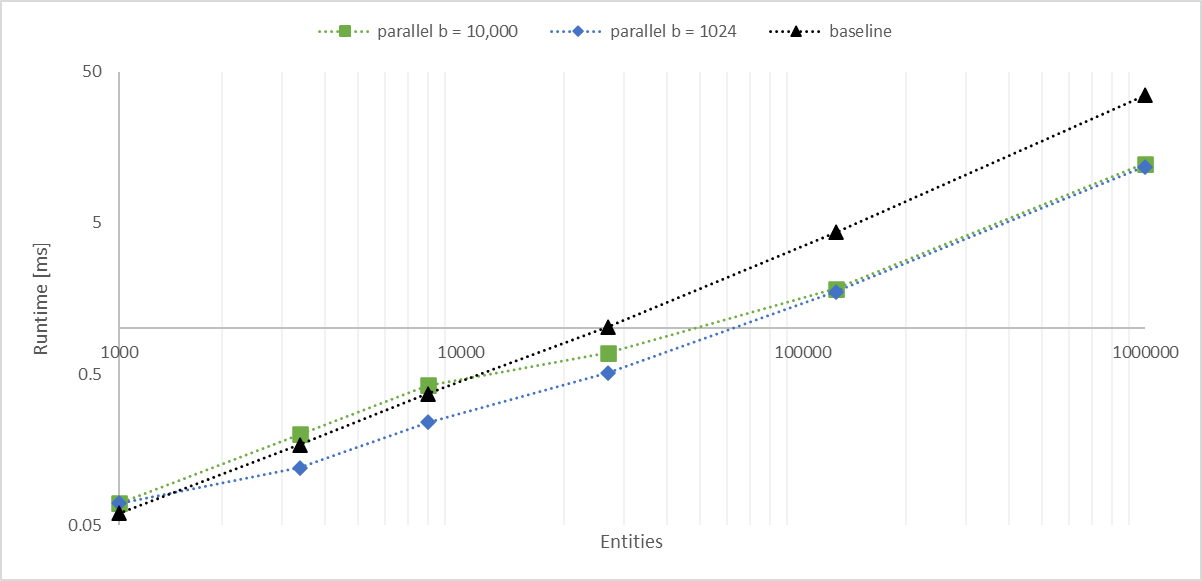 --- ## Changelog Frustum culling is now run with a parallel query. When culling more than a thousand entities, this is faster than the previous method, scaling proportionally with the number of available cores. |
||
|
Carter Anderson
|
f487407e07 |
Camera Driven Rendering (#4745)
This adds "high level camera driven rendering" to Bevy. The goal is to give users more control over what gets rendered (and where) without needing to deal with render logic. This will make scenarios like "render to texture", "multiple windows", "split screen", "2d on 3d", "3d on 2d", "pass layering", and more significantly easier. Here is an [example of a 2d render sandwiched between two 3d renders (each from a different perspective)](https://gist.github.com/cart/4fe56874b2e53bc5594a182fc76f4915): 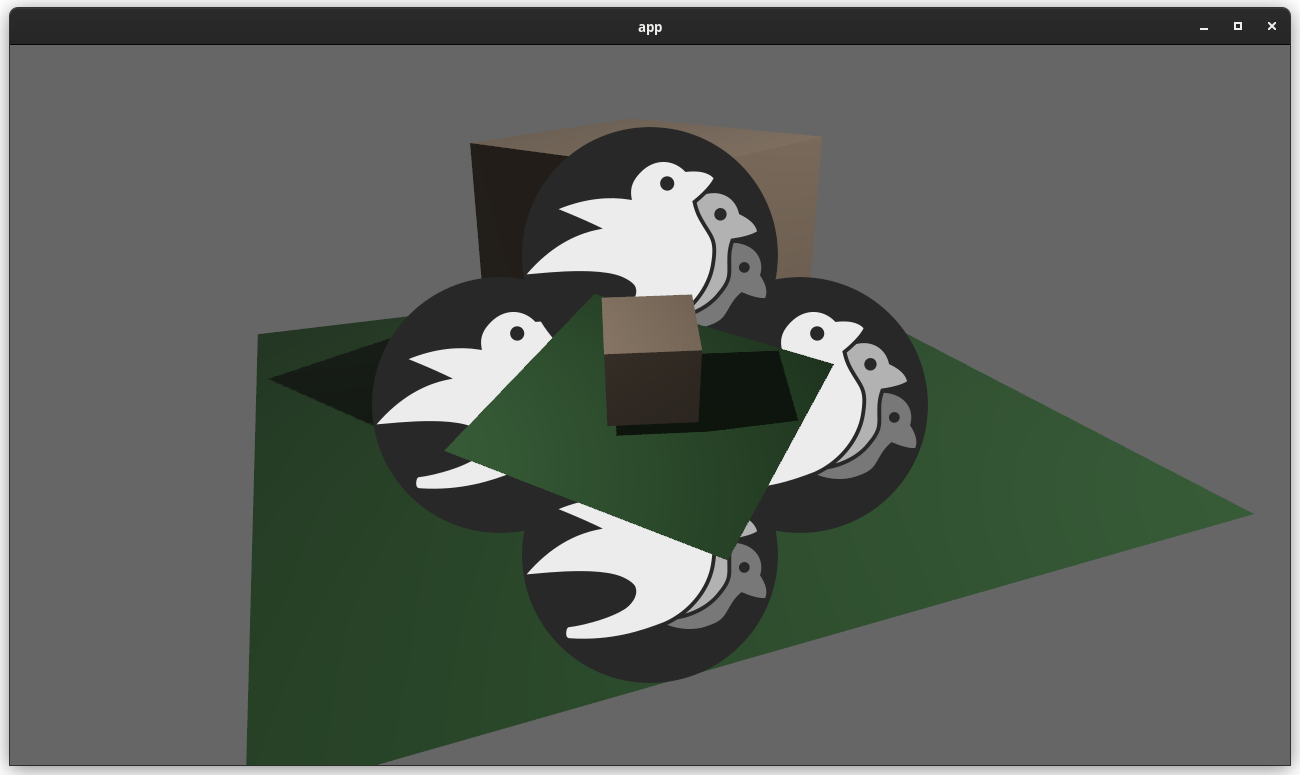 Users can now spawn a camera, point it at a RenderTarget (a texture or a window), and it will "just work". Rendering to a second window is as simple as spawning a second camera and assigning it to a specific window id: ```rust // main camera (main window) commands.spawn_bundle(Camera2dBundle::default()); // second camera (other window) commands.spawn_bundle(Camera2dBundle { camera: Camera { target: RenderTarget::Window(window_id), ..default() }, ..default() }); ``` Rendering to a texture is as simple as pointing the camera at a texture: ```rust commands.spawn_bundle(Camera2dBundle { camera: Camera { target: RenderTarget::Texture(image_handle), ..default() }, ..default() }); ``` Cameras now have a "render priority", which controls the order they are drawn in. If you want to use a camera's output texture as a texture in the main pass, just set the priority to a number lower than the main pass camera (which defaults to `0`). ```rust // main pass camera with a default priority of 0 commands.spawn_bundle(Camera2dBundle::default()); commands.spawn_bundle(Camera2dBundle { camera: Camera { target: RenderTarget::Texture(image_handle.clone()), priority: -1, ..default() }, ..default() }); commands.spawn_bundle(SpriteBundle { texture: image_handle, ..default() }) ``` Priority can also be used to layer to cameras on top of each other for the same RenderTarget. This is what "2d on top of 3d" looks like in the new system: ```rust commands.spawn_bundle(Camera3dBundle::default()); commands.spawn_bundle(Camera2dBundle { camera: Camera { // this will render 2d entities "on top" of the default 3d camera's render priority: 1, ..default() }, ..default() }); ``` There is no longer the concept of a global "active camera". Resources like `ActiveCamera<Camera2d>` and `ActiveCamera<Camera3d>` have been replaced with the camera-specific `Camera::is_active` field. This does put the onus on users to manage which cameras should be active. Cameras are now assigned a single render graph as an "entry point", which is configured on each camera entity using the new `CameraRenderGraph` component. The old `PerspectiveCameraBundle` and `OrthographicCameraBundle` (generic on camera marker components like Camera2d and Camera3d) have been replaced by `Camera3dBundle` and `Camera2dBundle`, which set 3d and 2d default values for the `CameraRenderGraph` and projections. ```rust // old 3d perspective camera commands.spawn_bundle(PerspectiveCameraBundle::default()) // new 3d perspective camera commands.spawn_bundle(Camera3dBundle::default()) ``` ```rust // old 2d orthographic camera commands.spawn_bundle(OrthographicCameraBundle::new_2d()) // new 2d orthographic camera commands.spawn_bundle(Camera2dBundle::default()) ``` ```rust // old 3d orthographic camera commands.spawn_bundle(OrthographicCameraBundle::new_3d()) // new 3d orthographic camera commands.spawn_bundle(Camera3dBundle { projection: OrthographicProjection { scale: 3.0, scaling_mode: ScalingMode::FixedVertical, ..default() }.into(), ..default() }) ``` Note that `Camera3dBundle` now uses a new `Projection` enum instead of hard coding the projection into the type. There are a number of motivators for this change: the render graph is now a part of the bundle, the way "generic bundles" work in the rust type system prevents nice `..default()` syntax, and changing projections at runtime is much easier with an enum (ex for editor scenarios). I'm open to discussing this choice, but I'm relatively certain we will all come to the same conclusion here. Camera2dBundle and Camera3dBundle are much clearer than being generic on marker components / using non-default constructors. If you want to run a custom render graph on a camera, just set the `CameraRenderGraph` component: ```rust commands.spawn_bundle(Camera3dBundle { camera_render_graph: CameraRenderGraph::new(some_render_graph_name), ..default() }) ``` Just note that if the graph requires data from specific components to work (such as `Camera3d` config, which is provided in the `Camera3dBundle`), make sure the relevant components have been added. Speaking of using components to configure graphs / passes, there are a number of new configuration options: ```rust commands.spawn_bundle(Camera3dBundle { camera_3d: Camera3d { // overrides the default global clear color clear_color: ClearColorConfig::Custom(Color::RED), ..default() }, ..default() }) commands.spawn_bundle(Camera3dBundle { camera_3d: Camera3d { // disables clearing clear_color: ClearColorConfig::None, ..default() }, ..default() }) ``` Expect to see more of the "graph configuration Components on Cameras" pattern in the future. By popular demand, UI no longer requires a dedicated camera. `UiCameraBundle` has been removed. `Camera2dBundle` and `Camera3dBundle` now both default to rendering UI as part of their own render graphs. To disable UI rendering for a camera, disable it using the CameraUi component: ```rust commands .spawn_bundle(Camera3dBundle::default()) .insert(CameraUi { is_enabled: false, ..default() }) ``` ## Other Changes * The separate clear pass has been removed. We should revisit this for things like sky rendering, but I think this PR should "keep it simple" until we're ready to properly support that (for code complexity and performance reasons). We can come up with the right design for a modular clear pass in a followup pr. * I reorganized bevy_core_pipeline into Core2dPlugin and Core3dPlugin (and core_2d / core_3d modules). Everything is pretty much the same as before, just logically separate. I've moved relevant types (like Camera2d, Camera3d, Camera3dBundle, Camera2dBundle) into their relevant modules, which is what motivated this reorganization. * I adapted the `scene_viewer` example (which relied on the ActiveCameras behavior) to the new system. I also refactored bits and pieces to be a bit simpler. * All of the examples have been ported to the new camera approach. `render_to_texture` and `multiple_windows` are now _much_ simpler. I removed `two_passes` because it is less relevant with the new approach. If someone wants to add a new "layered custom pass with CameraRenderGraph" example, that might fill a similar niche. But I don't feel much pressure to add that in this pr. * Cameras now have `target_logical_size` and `target_physical_size` fields, which makes finding the size of a camera's render target _much_ simpler. As a result, the `Assets<Image>` and `Windows` parameters were removed from `Camera::world_to_screen`, making that operation much more ergonomic. * Render order ambiguities between cameras with the same target and the same priority now produce a warning. This accomplishes two goals: 1. Now that there is no "global" active camera, by default spawning two cameras will result in two renders (one covering the other). This would be a silent performance killer that would be hard to detect after the fact. By detecting ambiguities, we can provide a helpful warning when this occurs. 2. Render order ambiguities could result in unexpected / unpredictable render results. Resolving them makes sense. ## Follow Up Work * Per-Camera viewports, which will make it possible to render to a smaller area inside of a RenderTarget (great for something like splitscreen) * Camera-specific MSAA config (should use the same "overriding" pattern used for ClearColor) * Graph Based Camera Ordering: priorities are simple, but they make complicated ordering constraints harder to express. We should consider adopting a "graph based" camera ordering model with "before" and "after" relationships to other cameras (or build it "on top" of the priority system). * Consider allowing graphs to run subgraphs from any nest level (aka a global namespace for graphs). Right now the 2d and 3d graphs each need their own UI subgraph, which feels "fine" in the short term. But being able to share subgraphs between other subgraphs seems valuable. * Consider splitting `bevy_core_pipeline` into `bevy_core_2d` and `bevy_core_3d` packages. Theres a shared "clear color" dependency here, which would need a new home. |
||
|
SarthakSingh31
|
dbd856de71 |
Nightly clippy fixes (#3491)
Fixes the following nightly clippy lints: - ~~[map_flatten](https://rust-lang.github.io/rust-clippy/master/index.html#map_flatten)~~ (Fixed on main) - ~~[needless_borrow](https://rust-lang.github.io/rust-clippy/master/index.html#needless_borrow)~~ (Fixed on main) - [return_self_not_must_use](https://rust-lang.github.io/rust-clippy/master/index.html#return_self_not_must_use) (Added in 1.59.0) - ~~[unnecessary_lazy_evaluations](https://rust-lang.github.io/rust-clippy/master/index.html#unnecessary_lazy_evaluations)~~ (Fixed on main) - [extra_unused_lifetimes](https://rust-lang.github.io/rust-clippy/master/index.html#extra_unused_lifetimes) outside of macros - [let_unit_value](https://rust-lang.github.io/rust-clippy/master/index.html#let_unit_value) |
||
|
Jakob Hellermann
|
2b6e67f4cb |
add #[reflect(Default)] to create default value for reflected types (#3733)
### Problem
It currently isn't possible to construct the default value of a reflected type. Because of that, it isn't possible to use `add_component` of `ReflectComponent` to add a new component to an entity because you can't know what the initial value should be.

### Solution

1. add `ReflectDefault` type
```rust
#[derive(Clone)]
pub struct ReflectDefault {
    default: fn() -> Box<dyn Reflect>,
}

impl ReflectDefault {
    pub fn default(&self) -> Box<dyn Reflect> {
        (self.default)()
    }
}

impl<T: Reflect + Default> FromType<T> for ReflectDefault {
    fn from_type() -> Self {
        ReflectDefault {
            default: || Box::new(T::default()),
        }
    }
}
```

2. add `#[reflect(Default)]` to all component types that implement `Default` and are user facing (so not `ComputedSize`, `CubemapVisibleEntities` etc.)


This makes it possible to add the default value of a component to an entity without any compile-time information:

```rust
fn main() {
    let mut app = App::new();
    app.register_type::<Camera>();

    let type_registry = app.world.get_resource::<TypeRegistry>().unwrap();
    let type_registry = type_registry.read();

    let camera_registration = type_registry.get(std::any::TypeId::of::<Camera>()).unwrap();
    let reflect_default = camera_registration.data::<ReflectDefault>().unwrap();
    let reflect_component = camera_registration
        .data::<ReflectComponent>()
        .unwrap()
        .clone();

    let default = reflect_default.default();

    drop(type_registry);

    let entity = app.world.spawn().id();
    reflect_component.add_component(&mut app.world, entity, &*default);

    let camera = app.world.entity(entity).get::<Camera>().unwrap();
    dbg!(&camera);
}
```

### Open questions
- should we have `ReflectDefault` or `ReflectFromWorld` or both?
|
||
|
bilsen
|
63fee2572b |
ParamSet for conflicting SystemParam:s (#2765)
# Objective Add a system parameter `ParamSet` to be used as container for conflicting parameters. ## Solution Added two methods to the SystemParamState trait, which gives the access used by the parameter. Did the implementation. Added some convenience methods to FilteredAccessSet. Changed `get_conflicts` to return every conflicting component instead of breaking on the first conflicting `FilteredAccess`. Co-authored-by: bilsen <40690317+bilsen@users.noreply.github.com> |
||
|
Robert Swain
|
ac8bbafc5c |
Faster view frustum culling (#4181)
# Objective - Reduce time spent in the `check_visibility` system ## Solution - Use `Vec3A` for all bounding volume types to leverage SIMD optimisations and to avoid repeated runtime conversions from `Vec3` to `Vec3A` - Inline all bounding volume intersection methods - Add on-the-fly calculated `Aabb` -> `Sphere` and do `Sphere`-`Frustum` intersection tests before `Aabb`-`Frustum` tests. This is faster for `many_cubes` but could be slower in other cases where the sphere test gives a false-positive that the `Aabb` test discards. Also, I tested precalculating the `Sphere`s and inserting them alongside the `Aabb` but this was slower. - Do not test meshes against the far plane. Apparently games don't do this anymore with infinite projections, and it's one fewer plane to test against. I made it optional and still do the test for culling lights but that is up for discussion. - These collectively reduce `check_visibility` execution time in `many_cubes -- sphere` from 2.76ms to 1.48ms and increase frame rate from ~42fps to ~44fps |
||
|
Alice Cecile
|
a304fd9a99 |
Split bevy_hierarchy out from bevy_transform (#4168)
# Objective - Hierarchy tools are not just used for `Transform`: they are also used for scenes. - In the future there's interest in using them for other features, such as visiibility inheritance. - The fact that these tools are found in `bevy_transform` causes a great deal of user and developer confusion - Fixes #2758. ## Solution - Split `bevy_transform` into two! - Make everything work again. Note that this is a very tightly scoped PR: I *know* there are code quality and docs issues that existed in bevy_transform that I've just moved around. We should fix those in a seperate PR and try to merge this ASAP to reduce the bitrot involved in splitting an entire crate. ## Frustrations The API around `GlobalTransform` is a mess: we have massive code and docs duplication, no link between the two types and no clear way to extend this to other forms of inheritance. In the medium-term, I feel pretty strongly that `GlobalTransform` should be replaced by something like `Inherited<Transform>`, which lives in `bevy_hierarchy`: - avoids code duplication - makes the inheritance pattern extensible - links the types at the type-level - allows us to remove all references to inheritance from `bevy_transform`, making it more useful as a standalone crate and cleaning up its docs ## Additional context - double-blessed by @cart in https://github.com/bevyengine/bevy/issues/4141#issuecomment-1063592414 and https://github.com/bevyengine/bevy/issues/2758#issuecomment-913810963 - preparation for more advanced / cleaner hierarchy tools: go read https://github.com/bevyengine/rfcs/pull/53 ! - originally attempted by @finegeometer in #2789. It was a great idea, just needed more discussion! Co-authored-by: Carter Anderson <mcanders1@gmail.com> |
||
|
Dusty DeWeese
|
81d57e129b |
Add capability to render to a texture (#3412)
# Objective Will fix #3377 and #3254 ## Solution Use an enum to represent either a `WindowId` or `Handle<Image>` in place of `Camera::window`. Co-authored-by: Carter Anderson <mcanders1@gmail.com> |
||
|
danieleades
|
d8974e7c3d |
small and mostly pointless refactoring (#2934)
What is says on the tin. This has got more to do with making `clippy` slightly more *quiet* than it does with changing anything that might greatly impact readability or performance. that said, deriving `Default` for a couple of structs is a nice easy win |
||
|
Robert Swain
|
55da315432 |
bevy_render: Provide a way to opt-out of the built-in frustum culling (#3711)
# Objective

- Allow opting-out of the built-in frustum culling for cases where its behaviour would be incorrect
- Make use of the this in the shader_instancing example that uses a custom instancing method. The built-in frustum culling breaks the custom instancing in the shader_instancing example if the camera is moved to:

```rust
    commands.spawn_bundle(PerspectiveCameraBundle {
        transform: Transform::from_xyz(12.0, 0.0, 15.0)
            .looking_at(Vec3::new(12.0, 0.0, 0.0), Vec3::Y),
        ..Default::default()
    });
```

...such that the Aabb of the cube Mesh that is at the origin goes completely out of view. This incorrectly (for the purpose of the custom instancing) culls the `Mesh` and so culls all instances even though some may be visible.


## Solution

- Add a `NoFrustumCulling` marker component
- Do not compute and add an `Aabb` to `Mesh` entities without an `Aabb` if they have a `NoFrustumCulling` marker component
- Do not apply frustum culling to entities with the `NoFrustumCulling` marker component
|
||
|
davier
|
c2da7800e3 |
Add 2d meshes and materials (#3460)
# Objective The current 2d rendering is specialized to render sprites, we need a generic way to render 2d items, using meshes and materials like we have for 3d. ## Solution I cloned a good part of `bevy_pbr` into `bevy_sprite/src/mesh2d`, removed lighting and pbr itself, adapted it to 2d rendering, added a `ColorMaterial`, and modified the sprite rendering to break batches around 2d meshes. ~~The PR is a bit crude; I tried to change as little as I could in both the parts copied from 3d and the current sprite rendering to make reviewing easier. In the future, I expect we could make the sprite rendering a normal 2d material, cleanly integrated with the rest.~~ _edit: see <https://github.com/bevyengine/bevy/pull/3460#issuecomment-1003605194>_ ## Remaining work - ~~don't require mesh normals~~ _out of scope_ - ~~add an example~~ _done_ - support 2d meshes & materials in the UI? - bikeshed names (I didn't think hard about naming, please check if it's fine) ## Remaining questions - ~~should we add a depth buffer to 2d now that there are 2d meshes?~~ _let's revisit that when we have an opaque render phase_ - ~~should we add MSAA support to the sprites, or remove it from the 2d meshes?~~ _I added MSAA to sprites since it's really needed for 2d meshes_ - ~~how to customize vertex attributes?~~ _#3120_ Co-authored-by: Carter Anderson <mcanders1@gmail.com> |
||
|
davier
|
76ec709ede |
Add Visibility component to UI (#3426)
# Objective Fixes #3422 ## Solution Adds the existing `Visibility` component to UI bundles and checks for it in the extract phase of the render app. The `ComputedVisibility` component was not added. I don't think the UI camera needs frustum culling, but having `RenderLayers` work may be desirable. However I think we would need to change `check_visibility()` to differentiate between 2d, 3d and UI entities. |
||
|
Carter Anderson
|
ffecb05a0a |
Replace old renderer with new renderer (#3312)
This makes the [New Bevy Renderer](#2535) the default (and only) renderer. The new renderer isn't _quite_ ready for the final release yet, but I want as many people as possible to start testing it so we can identify bugs and address feedback prior to release. The examples are all ported over and operational with a few exceptions: * I removed a good portion of the examples in the `shader` folder. We still have some work to do in order to make these examples possible / ergonomic / worthwhile: #3120 and "high level shader material plugins" are the big ones. This is a temporary measure. * Temporarily removed the multiple_windows example: doing this properly in the new renderer will require the upcoming "render targets" changes. Same goes for the render_to_texture example. * Removed z_sort_debug: entity visibility sort info is no longer available in app logic. we could do this on the "render app" side, but i dont consider it a priority. |


